Can Images Create Desire?
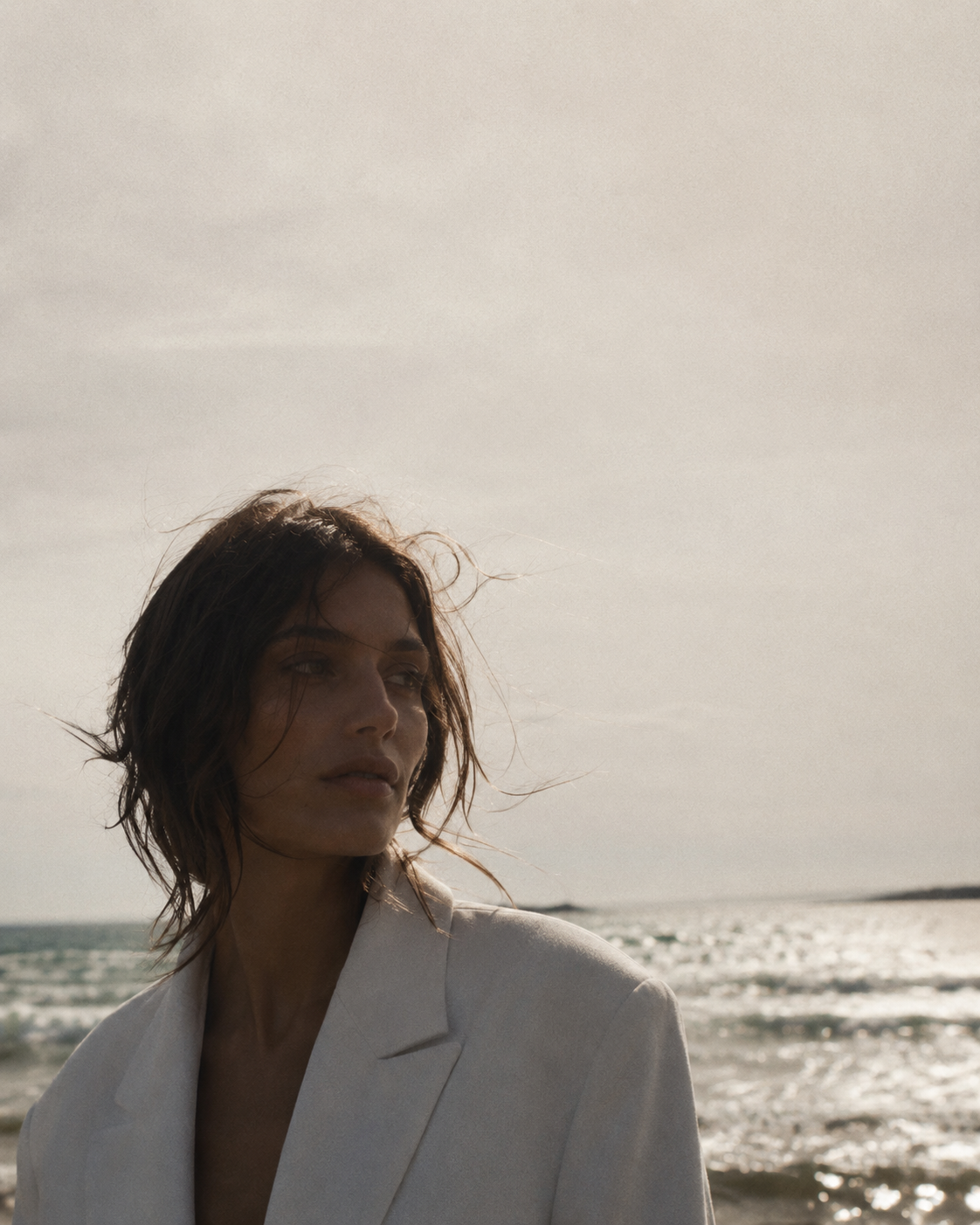
Portrait of photographer and Creative Director Alessia Moccia looking out towards the sea at sunset, reflecting on visual storytelling, desire and the emotional power of images.
Some thoughts from behind the camera.
For most of my career, I thought my job was to create beautiful images.
Today, I'm not so sure.
The more I photograph, direct and build visual worlds, the more I find myself asking a different question.
Can an image change the way we feel?
The way we choose?
The way we desire?
Why do some images stay with us, while others disappear a second later?
Lately, I've become fascinated by psychology and neuroscience—not because I want to become a scientist, but because I want to become a better visual storyteller.
I'm curious about attention.
Memory.
Emotion.
Desire.
Not as marketing buzzwords, but as human experiences.
Because, in the end, every image is made for a human brain.
Before we visit a place, we've usually seen it.
Before we buy a dress, we've imagined ourselves wearing it.
Before we book a restaurant, we've already pictured the table.
Sometimes I wonder how many of our decisions begin long before we realise we're making them.
Maybe they begin with an image.
When I think about the fashion photographs I've loved all my life, I realise something.
I rarely remember them because they were technically perfect.
I remember them because they made me feel something.
Sometimes mystery.
Sometimes freedom.
Sometimes nostalgia.
Sometimes I couldn't even explain why.
The more I read, the more I discover that our brains don't simply respond to beauty.
They respond to meaning.
To memories.
To curiosity.
To things left unsaid.
Maybe that's why the images I love the most never explain everything.
They leave me wondering.
As creative tools evolve, our possibilities become almost limitless.
That's exciting.
But in my experience, better tools don't automatically create more meaningful images. It's one of the reasons why so much AI-generated imagery still feels emotionally empty, an idea I explored further in Why Most AI Imagery Feels Empty and Why Luxury Rejects It.
They simply give us more ways to express an idea. As I wrote in The First Image Is Invisible, every meaningful image begins long before it's ever created.
The difficult part is still the same.
Having something worth expressing.
That's why, alongside photography, filmmaking and new creative technologies, I'm spending more and more time studying psychology, neuroscience and visual perception.
Not to become an expert.
Simply because I believe understanding people might make me a better director.
I don't know if images create desire.
I'm still exploring that question.
But I have a feeling that desire doesn't begin with pixels.
It begins with people.
And maybe that's where every truly memorable image starts.
Continue reading
Every memorable image begins long before the camera.