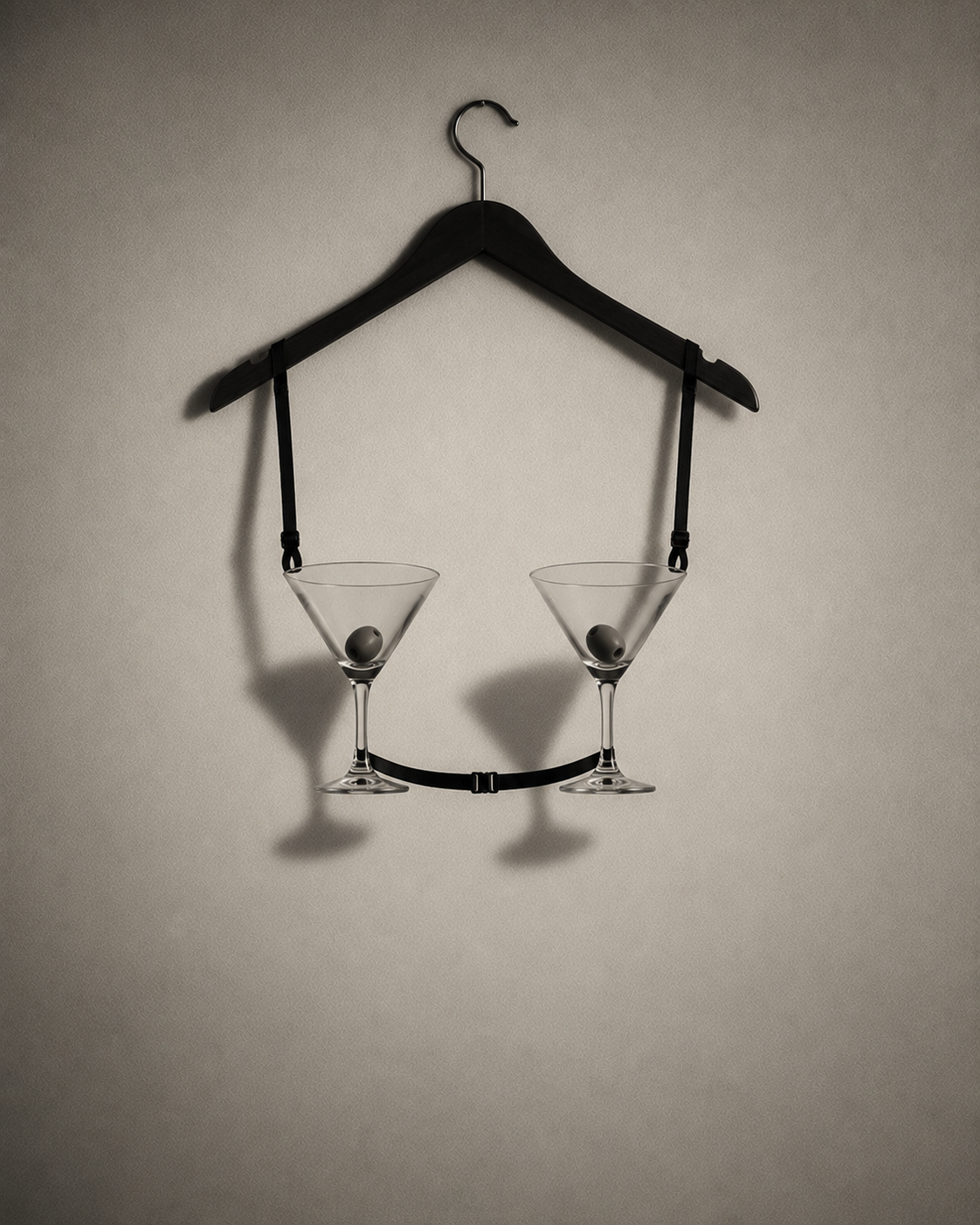
Bratini. Conceptual fashion photograph by Creative Director Alessia Moccia, transforming a black bra into two martini glasses to explore desire, elegance and visual metaphor.
When I started studying photography in Miami, I expected to learn about cameras.
Instead, I learned about ideas.
Before photography, I had worked as an art director. Looking back, I realise I never really changed professions. I simply changed the medium.
The process remained the same.
Every project started with a question.
Not how should this look?
But what are we trying to say?
One of my teachers introduced me to the work of Chema Madoz. His photographs fascinated me because they weren't about objects at all. They were about thought. A leaf, a glass, a book, a simple everyday object could suddenly become something entirely different. The photograph wasn't documenting reality. It was expressing an idea.
Around the same time, I bought my first photography book.
It was Tim Walker.
At first, the contrast couldn't have been greater.
Chema Madoz removed everything that wasn't essential.
Tim Walker built extraordinary worlds.
One searched for poetry through simplicity.
The other through spectacle.
Yet the more I studied their work, the more I realised they were doing exactly the same thing.
Neither of them started with a camera.
They started with a concept.
That changed the way I understand fashion photography.
People often believe fashion photography begins on set.
With the model.
The clothes.
The lights.
The camera.
For me, those are some of the last decisions.
The first image is invisible.
It exists during conversations around a table.
Inside sketchbooks.
In architecture, cinema, literature and music.
In references passed between a stylist and a photographer.
In long discussions with a client trying to define not what they want to show, but what they want people to feel.
Only after that do we begin casting.
Choosing a location.
Building the styling.
Finding the right light.
Every person contributes to the same invisible image before anyone takes a photograph.
That's why I've never believed fashion photography exists to sell clothes.
If it did, a catalogue would be enough.
Luxury has always sold something far less tangible.
A feeling.
An attitude.
A memory.
A possibility.
When someone remembers a Saint Laurent campaign years later, they rarely remember the stitching of a jacket.
They remember how that world made them feel.
Today, whether I'm developing visual campaigns for brands such as THE OUTNET or directing AI-assisted luxury films, I return to exactly the same process I learned years ago. The technology has changed. The creative starting point never has.
People sometimes ask whether AI changes the creative process.
In my experience, it doesn't.
Technology may change the tools.
It never changes the first decision.
Every meaningful image still begins exactly where it always has.
With an idea that doesn't yet exist anywhere except in someone's imagination.
The first image is invisible.
Everything that follows is simply our attempt to make it visible.
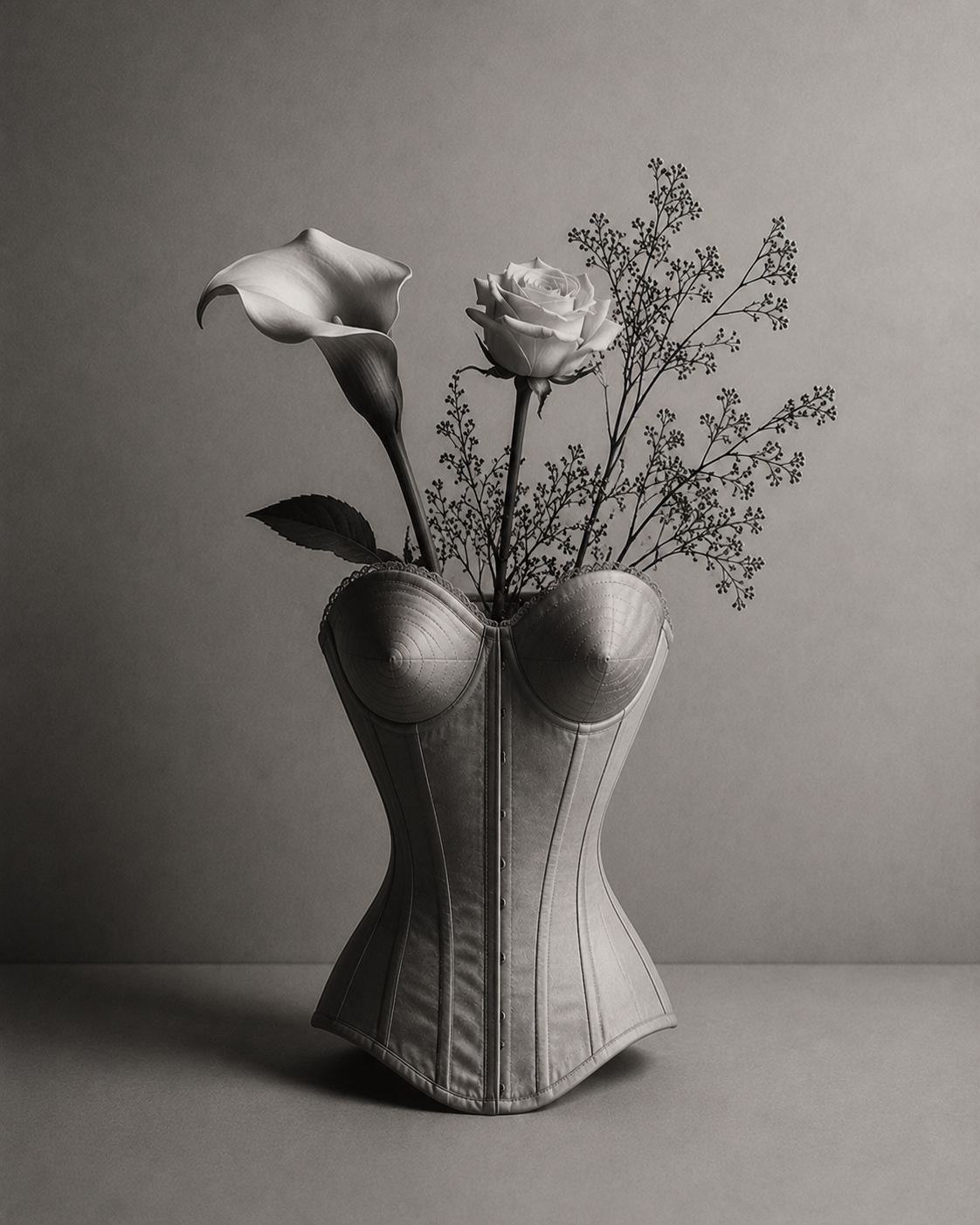
Haute Nature. Conceptual still life by Creative Director Alessia Moccia, transforming a sculptural corset into a floral vase to explore beauty, transformation and second life.