On the technology we embrace, the creativity we question, and our selective fear of change.
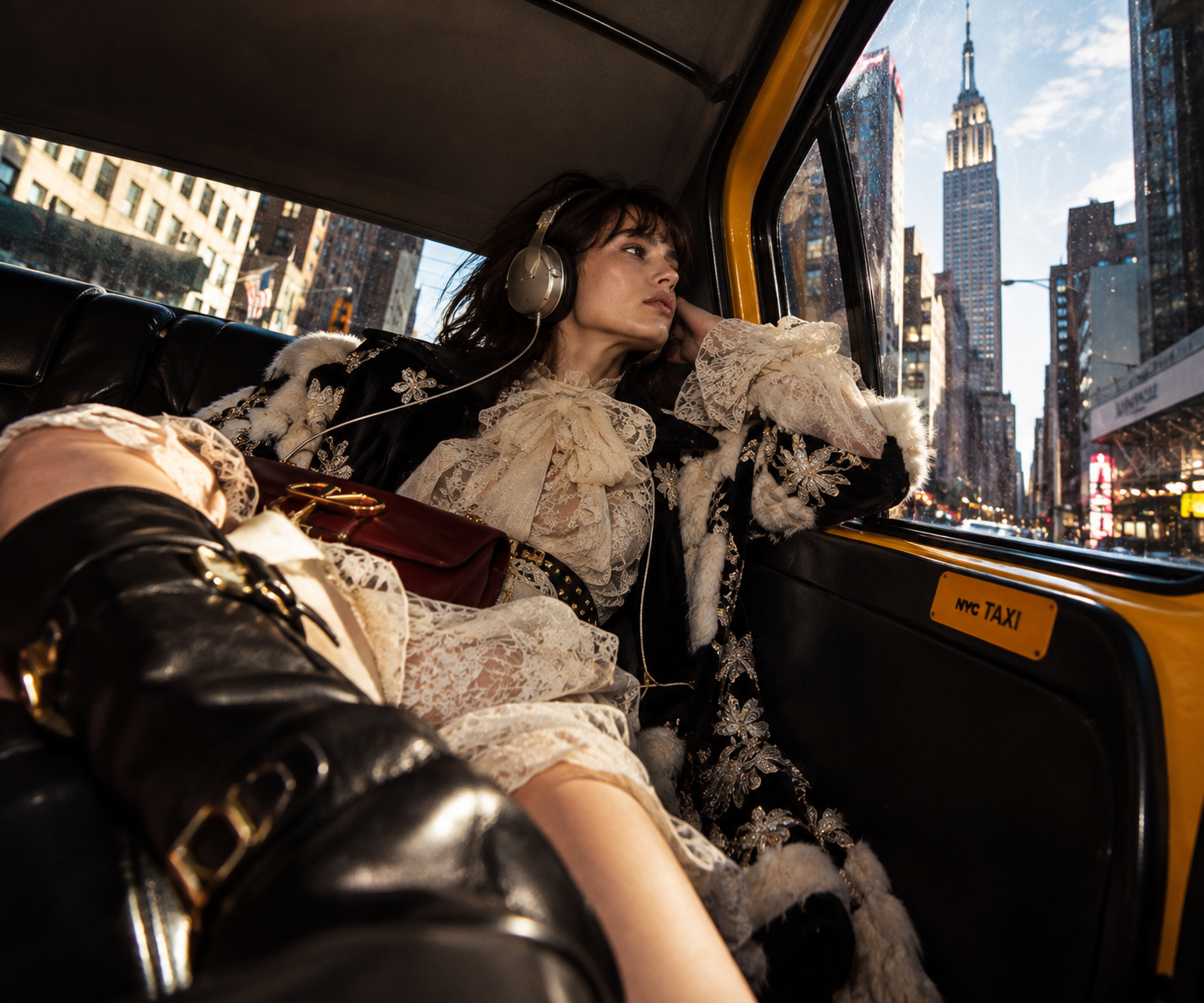
A fashion image by Alessia Moccia: a woman in lace and embellished black outerwear listens through headphones inside a New York taxi, with the Empire State Building framed through the window.
This morning, I was listening to Spotify.
It suggested a song I had never heard before. I loved it.
Later, I opened Google Maps. It found a faster route, avoiding traffic I didn’t even know existed.
Nothing extraordinary.
Except that both moments made me think about how comfortably we have welcomed algorithms into our lives.
We let systems learn our tastes, predict our preferences, recommend what to watch, what to buy, where to go.
Most of the time, we barely think about the technology behind it.
But let someone create a photograph or a fashion film using generative AI, and suddenly the conversation changes.
Is it real?
Is it art?
Did you actually make it?
I find that contradiction fascinating.
Not every recommendation system or navigation algorithm is the same kind of AI, of course. Generating an image is not the same as predicting traffic.
But our reactions reveal something interesting.
We seem perfectly comfortable with machines helping us decide.
We are less comfortable with machines helping us create.
Perhaps because creativity has always felt like one of the last exclusively human territories.
As a photographer and filmmaker working with generative AI, I understand the discomfort.
I come from a world where the camera, the location, the light and the physical act of photographing were inseparable from the final image.
But I have never believed that the equipment was responsible for the imagination.
AI can generate a thousand images in minutes.
That doesn’t mean any of them is worth looking at.
Someone still has to recognize what matters.
Make choices.
Reject the obvious.
Know when to stop.
And perhaps the question isn’t whether AI belongs in creativity.
It is why we embrace technology so easily when it saves us time, yet become suspicious when it expands what we can imagine.
We don’t mind machines learning what we like.
We become uncomfortable when they help us show what we see.