Conversations and photographs from a changing Bed-Stuy, Brooklyn.
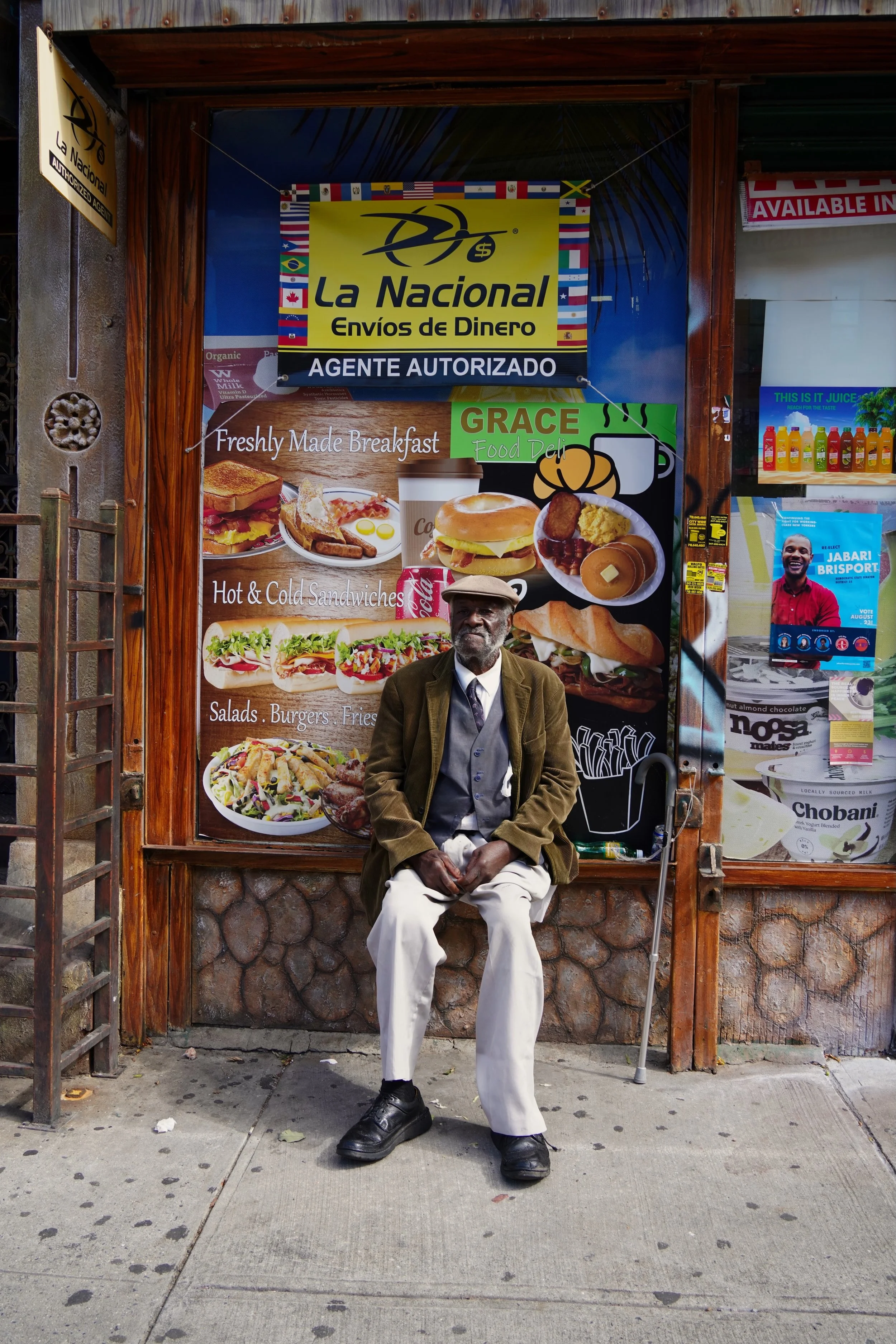
An elderly man sits outside a longtime neighbourhood storefront in Bed-Stuy, Brooklyn — a quiet portrait of permanence within a changing street.
A young man in Bed-Stuy once told me that you could recognise gentrification by two things:
Cupcake shops and sushi restaurants.
“When they start appearing,” he said, “you know the neighbourhood is changing.”
I laughed.
It was probably the simplest explanation of gentrification I had ever heard.
In 2022, I was photographing Bedford-Stuyvesant, Brooklyn — a neighbourhood where change was becoming visible on almost every street.
Renovated brownstones. Construction work. New supermarkets. Moving trucks. New businesses opening. Unfamiliar faces arriving.
But I was interested in the people who lived there, not just the buildings.
So I started talking to them.
And I quickly discovered that walking around Bed-Stuy with a camera, asking residents how they felt about gentrification, wasn’t always a particularly welcome activity.
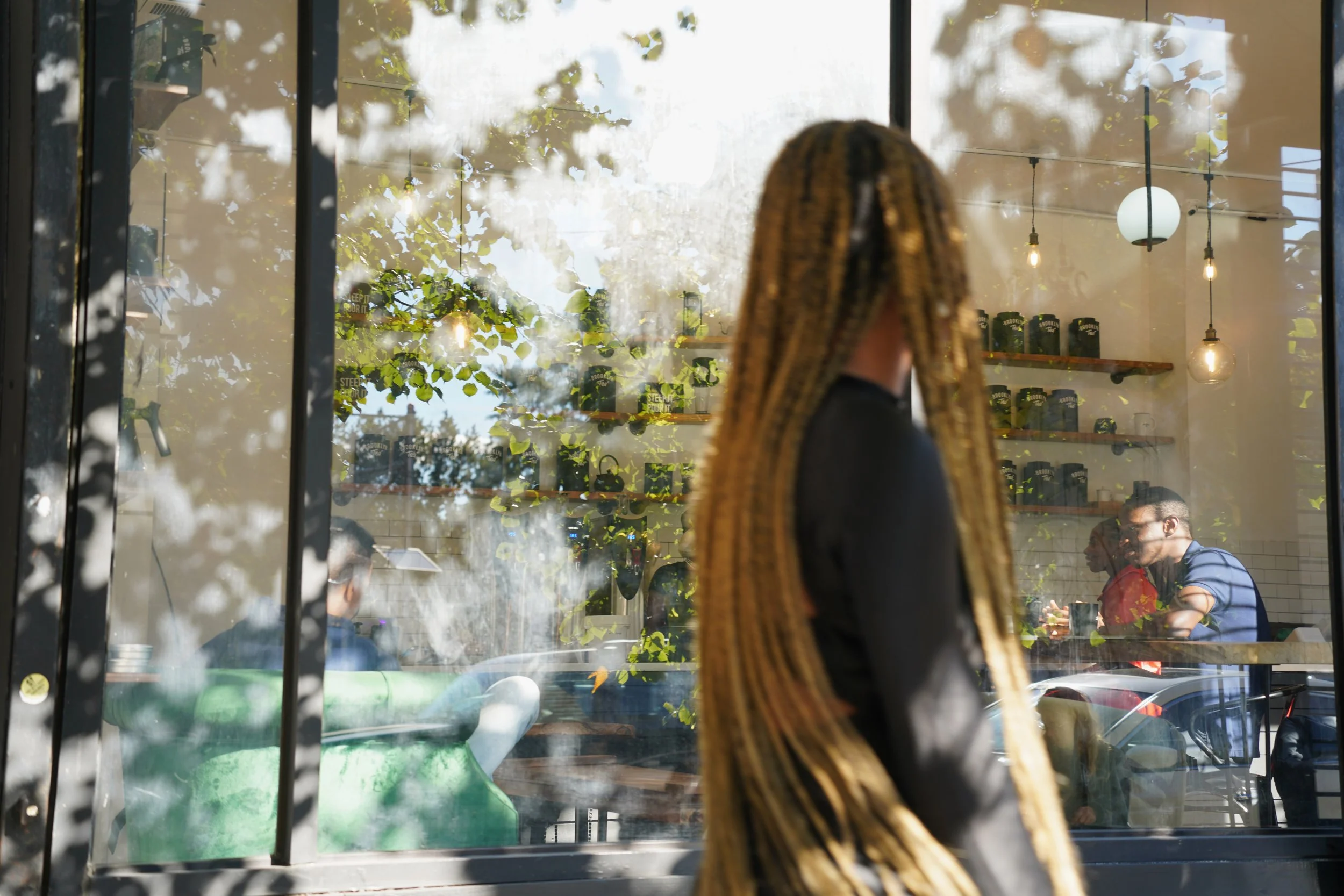
A woman passes a newly polished café window as diners sit behind the glass, bringing two versions of Bed-Stuy into the same frame.
Especially when you’re a white woman asking questions in a historically Black neighbourhood.
Some conversations were friendly.
Others were uncomfortable.
A few made me wonder whether I should put the camera away and leave.
But I kept listening.
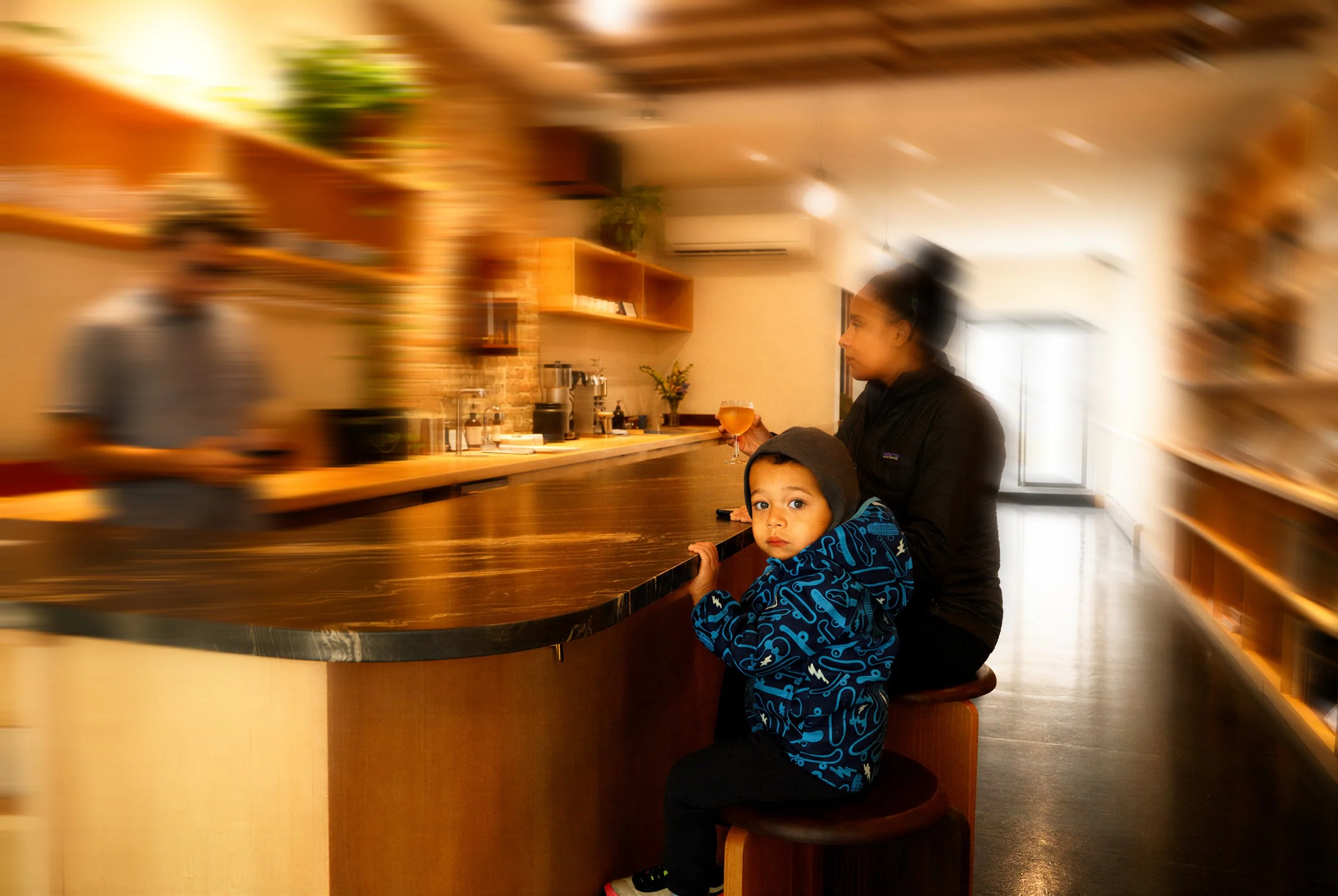
A child looks toward the camera inside a new neighbourhood café, surrounded by the polished interiors of a changing Brooklyn.
What surprised me most was how different the answers were.
Some residents welcomed the changes. New shops meant jobs, services and opportunities that hadn’t existed before.
Others were less enthusiastic.
Rents were rising. Familiar businesses were disappearing. People who had lived there for years could no longer afford to stay.
And some simply no longer recognised the neighbourhood they had always called home.
There wasn’t one Bed-Stuy.
And there certainly wasn’t one opinion about what was happening to it.
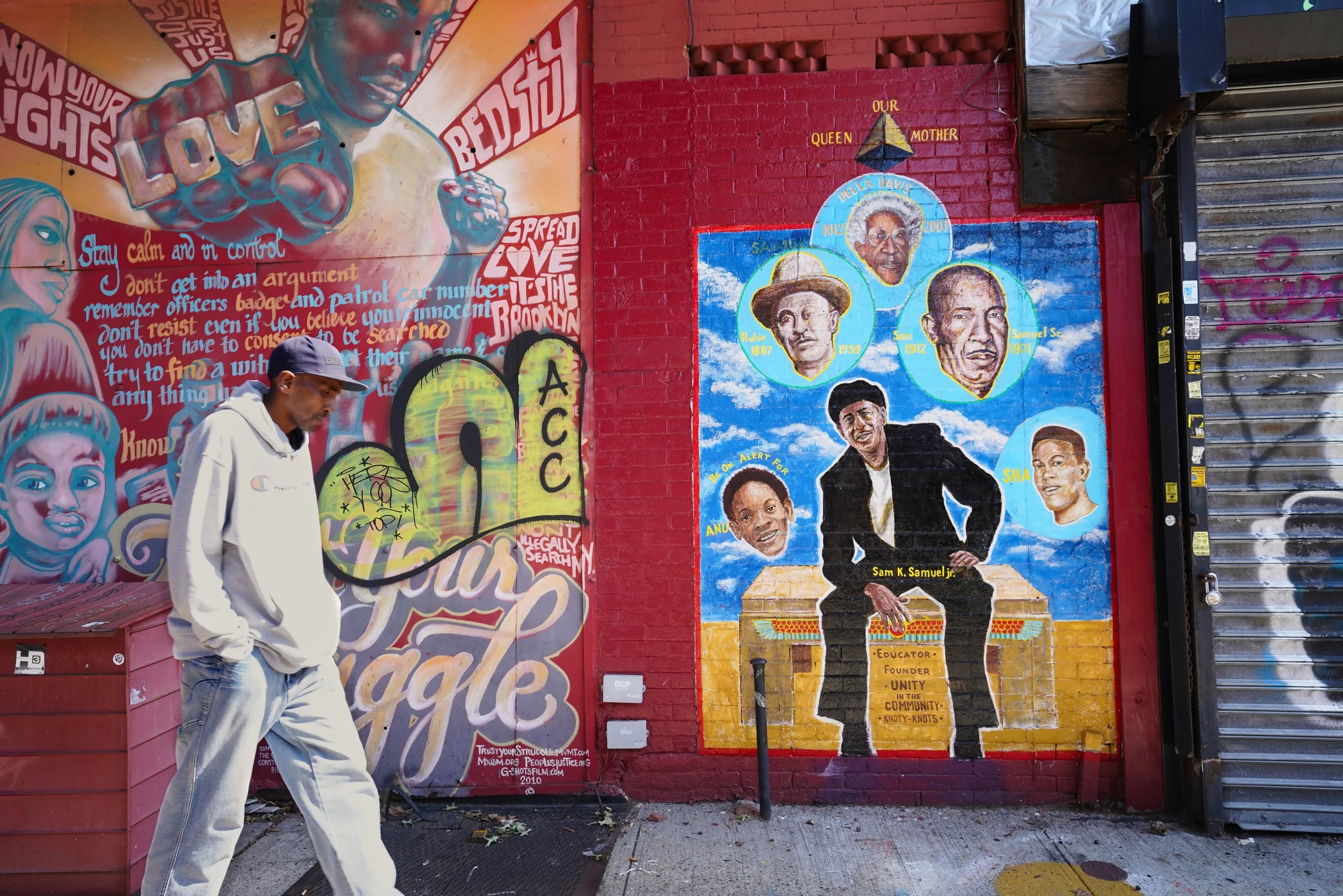
A man walks past murals honouring Bed-Stuy’s cultural history, where everyday life and collective memory continue to occupy the same wall.
I didn’t want to photograph gentrification as a battle between good and bad, old and new.
I wanted to photograph the people living through it.
The man sitting on his stoop.
The young people on the street.
The businesses that had been there for decades.
The signs of a neighbourhood changing while everyday life continued around them.
That is how GEN3FICATION developed.
I became interested in the contradictions.
A beautifully restored brownstone could represent investment and improvement to one person — and the possibility of being priced out to another.
A new supermarket might mean convenience and employment.
A rising rent might mean leaving behind an entire community.
Both things could be true.
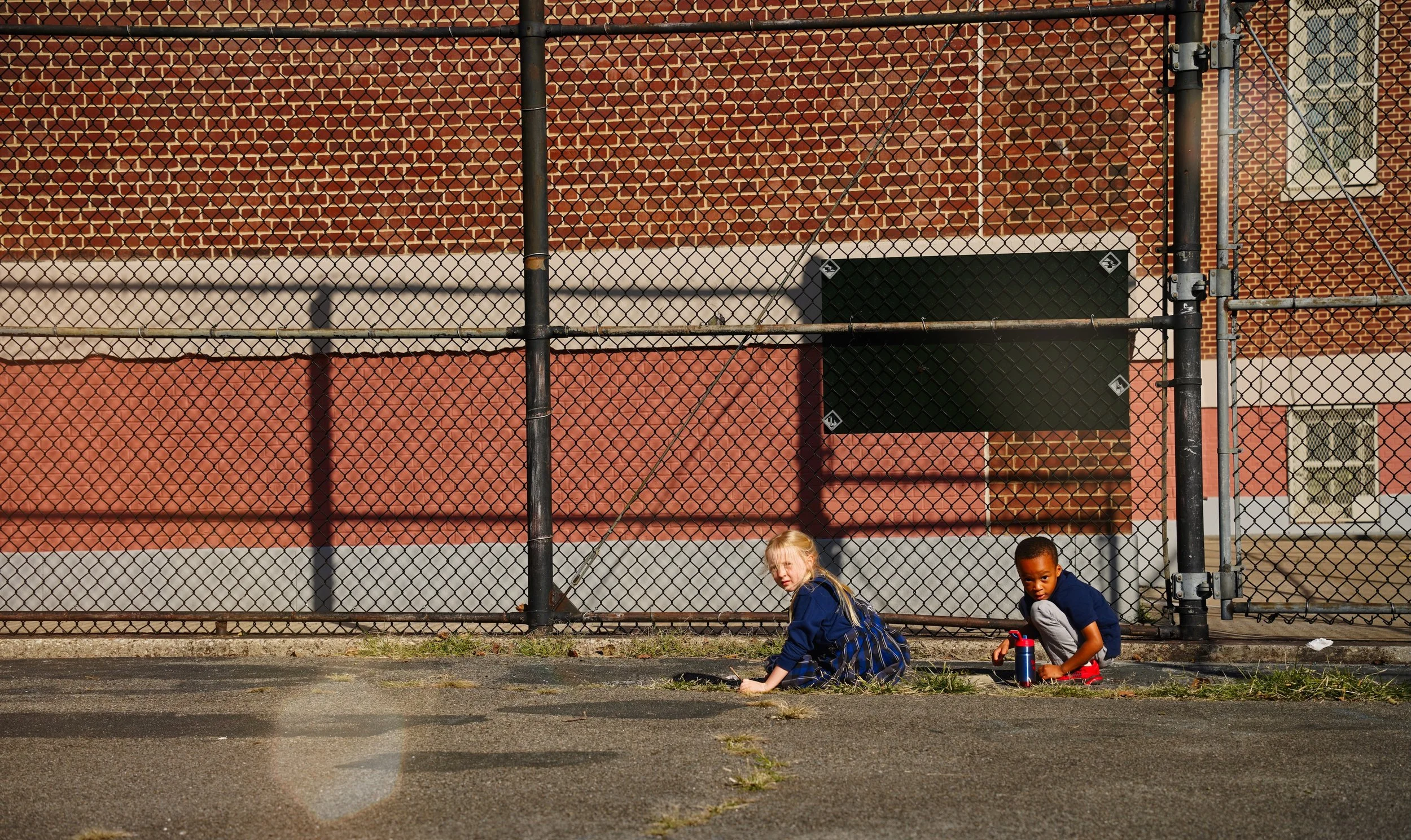
Two children play beside a chain-link fence in Bed-Stuy — an ordinary moment set against the architecture of a neighbourhood in transition.
I still think about that young man’s cupcake theory.
It was funny, but there was something wonderfully precise about it.
You don’t always recognise a city changing through statistics, planning reports or political speeches.
Sometimes it is much smaller than that.
A different shop on the corner.
A moving truck outside a familiar building.
A new name above an old storefront.
A face you have never seen before.
And sometimes, years later, you look at an old photograph and realise that what you captured wasn’t simply a street scene.
It was a neighbourhood in the brief, complicated moment between what it had been and what it was becoming.
Maybe that is what photographs do best.
They notice before we know what we are looking at.
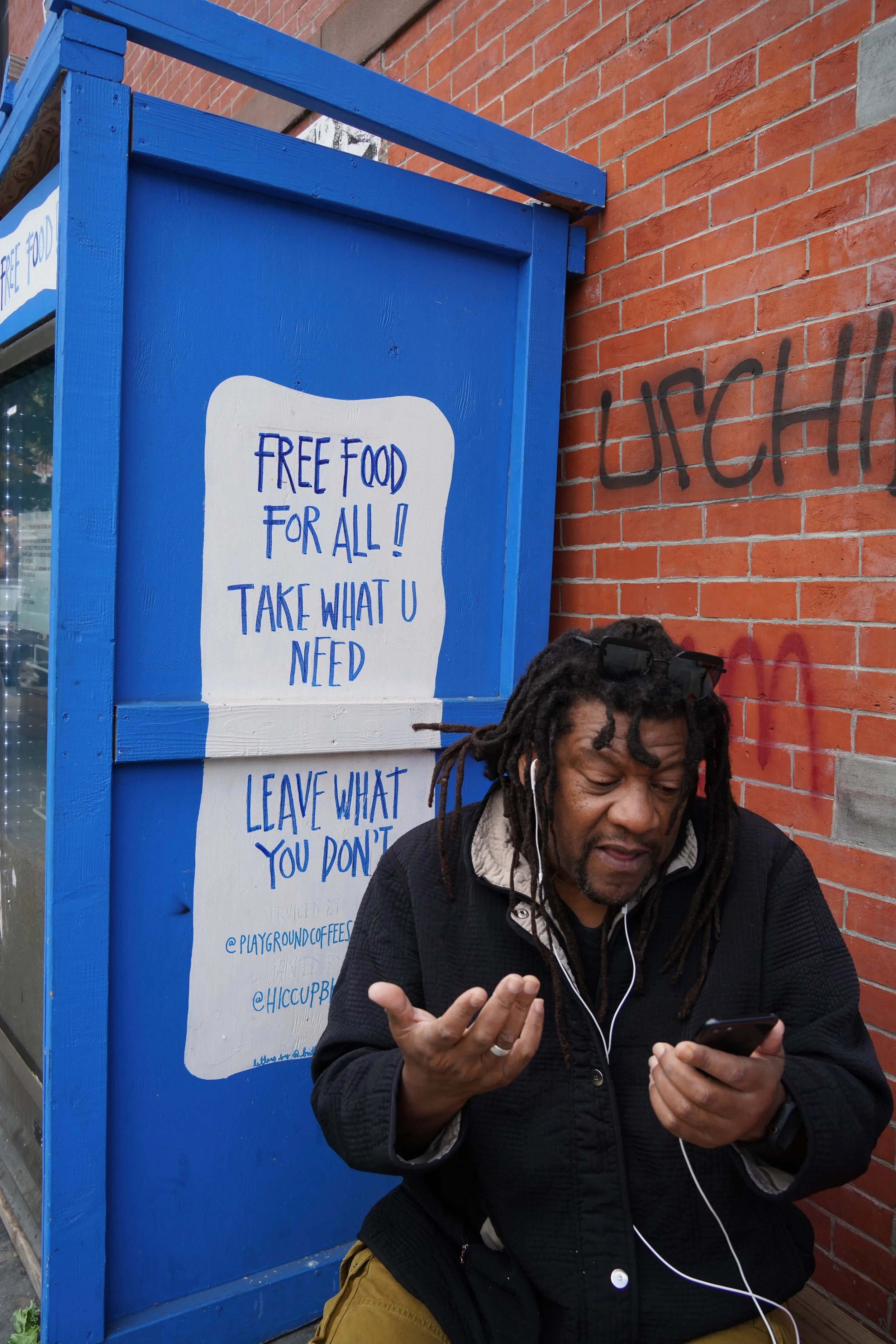
A man stands beside a community food station in Bed-Stuy, where mutual aid and everyday street life remain visible amid wider neighbourhood change.