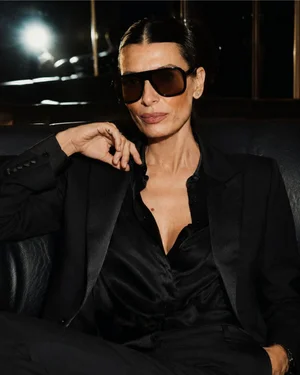
Apparently, I Have a Thing for Chandeliers.
On photography, AI, and why I keep putting chandeliers where they don’t belong.

Three women in ivory lace dresses sit on oversized satin chairs beneath candlelit chandeliers draped in white flowers. A surreal garden scene by Alessia Moccia, created using AI.
I have been putting chandeliers into my pictures for years.
Above models at the top of the Empire State Building. Inside a boxing gym. At a decadent party. In the middle of a desert.
They were never really there.
I put them there.
Antique, preferably. Gold, crystal, excessive, slightly decadent.
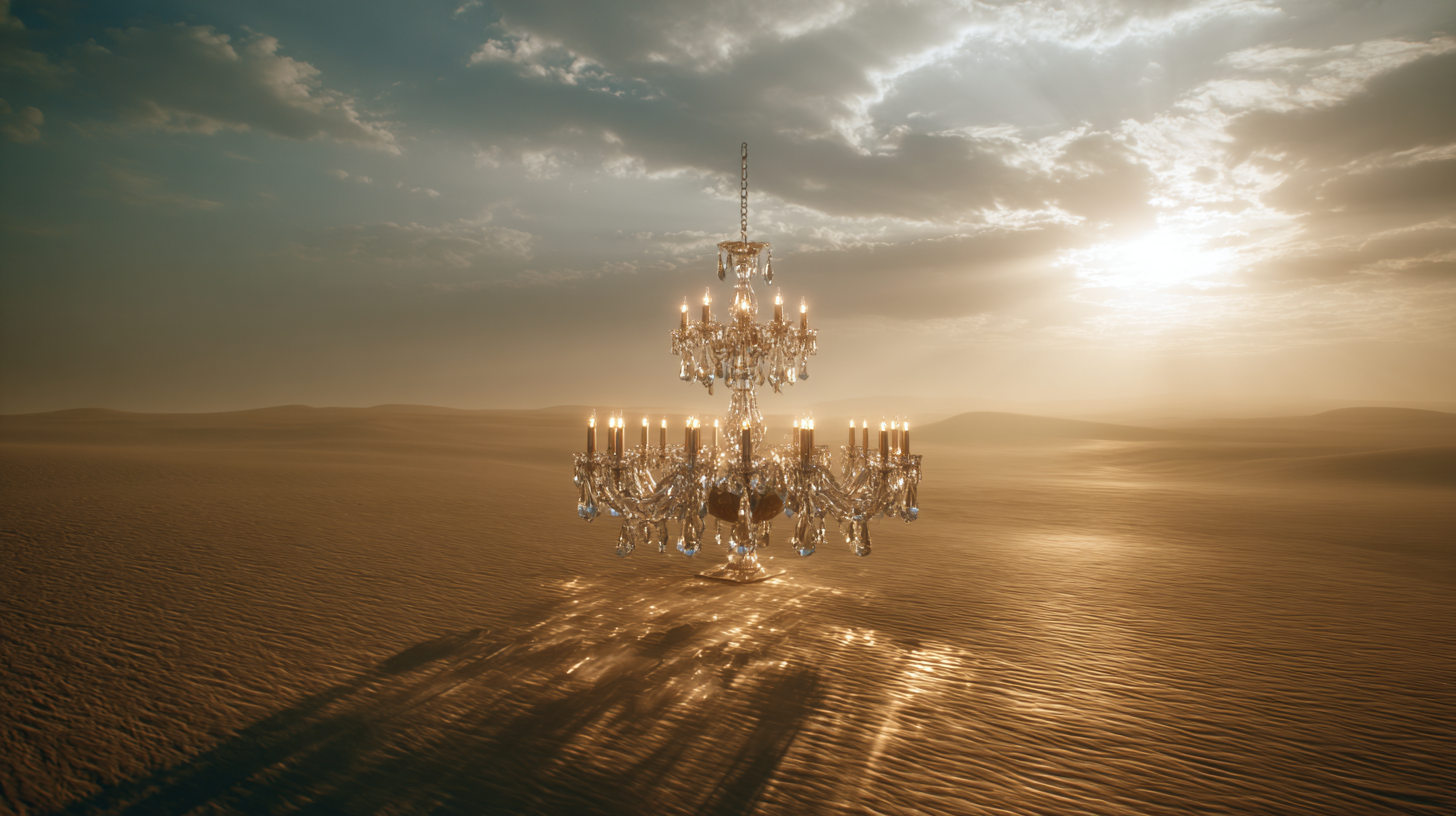
The Desert Light by Alessia Moccia. An ornate crystal chandelier glows above rippled desert sand, casting long shadows beneath a dramatic sky. A surreal landscape created using AI.
Then, on Tuesday night, I watched Anthony Vaccarello’s Saint Laurent show in Paris. Three enormous chandeliers above the runway, the Eiffel Tower behind them.
And I thought: there they are again.
He hadn’t given me a new idea. He had made me recognize an old obsession.
So I went back through my archive.
The Light Was Never Enough
A chandelier is a strange object.
One light would be enough. Instead, we suspend elaborate structures of metal, crystal and candles above our heads.
We turn light into spectacle.
I have always loved objects that seem to remember another time. Old mirrors. Heavy curtains. Gilded frames. Things that suggest something happened before we arrived.
A chandelier carries that history into an image. Beauty, wealth, ceremony. A little decadence.
It is enormously heavy, yet it floats.
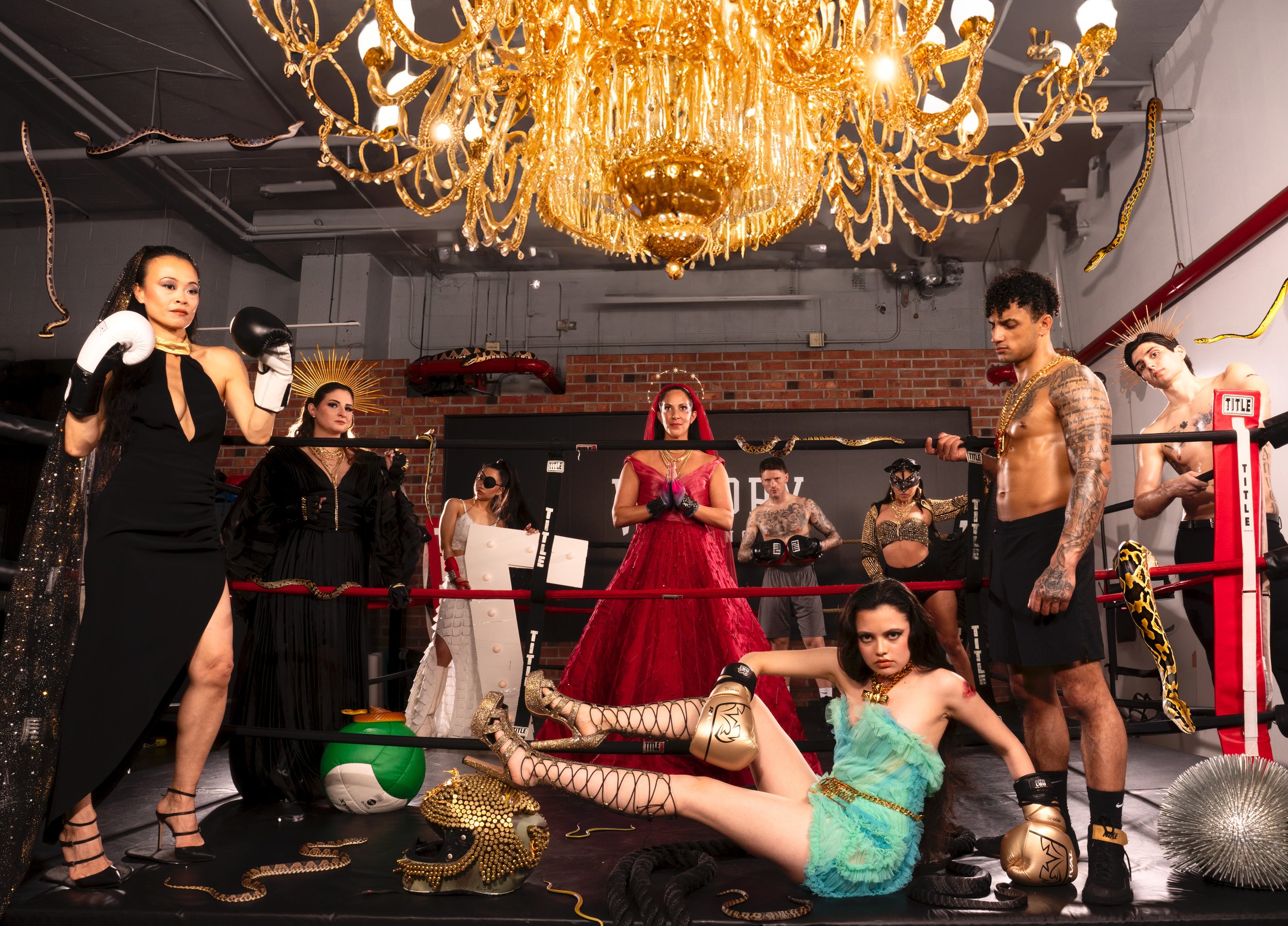
DAMN Knockout by Alessia Moccia, photographed in a real boxing gym in Manhattan. Models in eveningwear and fighters pose inside the ring beneath an oversized golden chandelier.
In Damn Knockout, the boxing gym, the models and the fighters were real. The chandeliers were not. I added them using AI.
I wanted the collision.
Sweat and gold.
Boxing gloves beneath the ceiling of an imaginary palace.
In The Party, the excess spread into velvet, mirrors, cakes and candlelight.
Then, in The Desert Light, I took away the architecture.
No ceiling. No palace.
Just the chandelier where it had no reason to be.
The Chandeliers Were Mine
I came to AI through photography.
My starting point was a body, a room, a gesture, a particular quality of light. But I have always wanted to interfere with reality.
AI expanded how far I could go.
I could alter a photograph or construct an entire world, still thinking like a photographer: about framing, skin, distance, atmosphere. And through film, about movement and time.
But AI wasn’t suggesting chandeliers to me.
The chandeliers were mine.
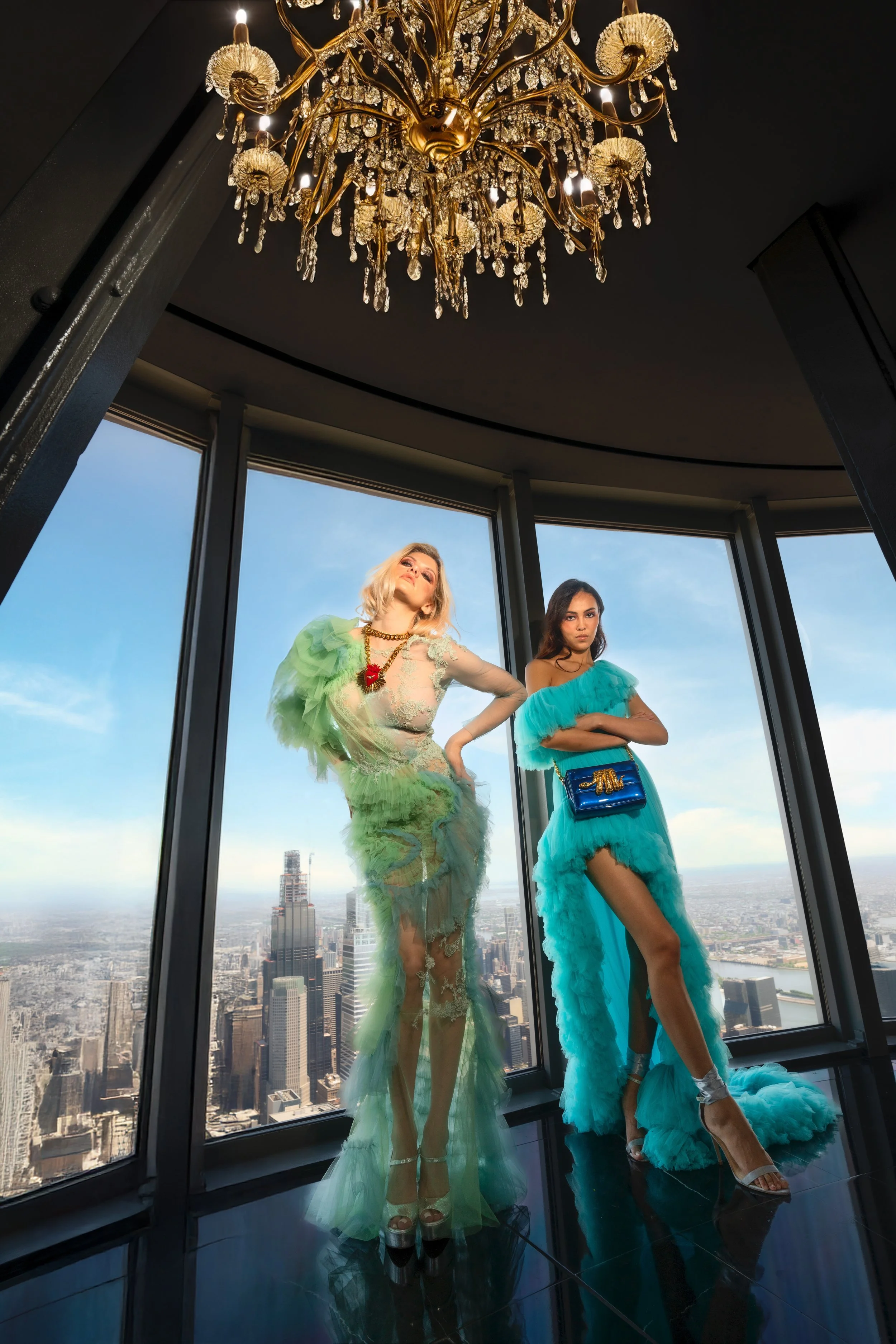
DAMN Kong by Alessia Moccia, a fashion editorial photographed with real models inside the Empire State Building. Two women in mint-green and turquoise gowns pose against the Manhattan skyline beneath a golden crystal chandelier.
I don’t ask AI to imagine for me. I use it to materialize what I am already imagining.
The technology changes.
The obsession doesn’t.
Somewhere to Put the Light
While thinking about this, I came across the relationship between light and vessel in Kabbalistic thought.
I’m drawn to the parallel.
A chandelier gives light a structure. Crystal catches it, fragments it, sends it across the room.
Fashion does something similar. A dress could simply cover a body. Then we add embroidery, feathers, impossible volumes, hours of craftsmanship.
Luxury often begins where necessity ends.
A chandelier does that to light.
Perhaps that is why I keep returning to it.
The photograph didn’t need it.
The boxing gym didn’t need it.
The desert certainly didn’t.
I did.
Maybe I was never adding chandeliers to my photographs.
Maybe I was looking for somewhere to put the light.

A still from an AI fragrance commercial by Alessia Moccia for Euphoria Studio. A man in a black tuxedo stands in an ornate interior, surrounded by crystal chandeliers and warm golden light.