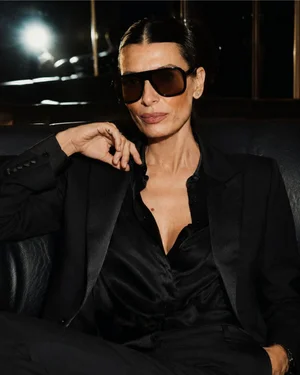
Luxury is built on control. Control of image. Control of perception. Control of time.
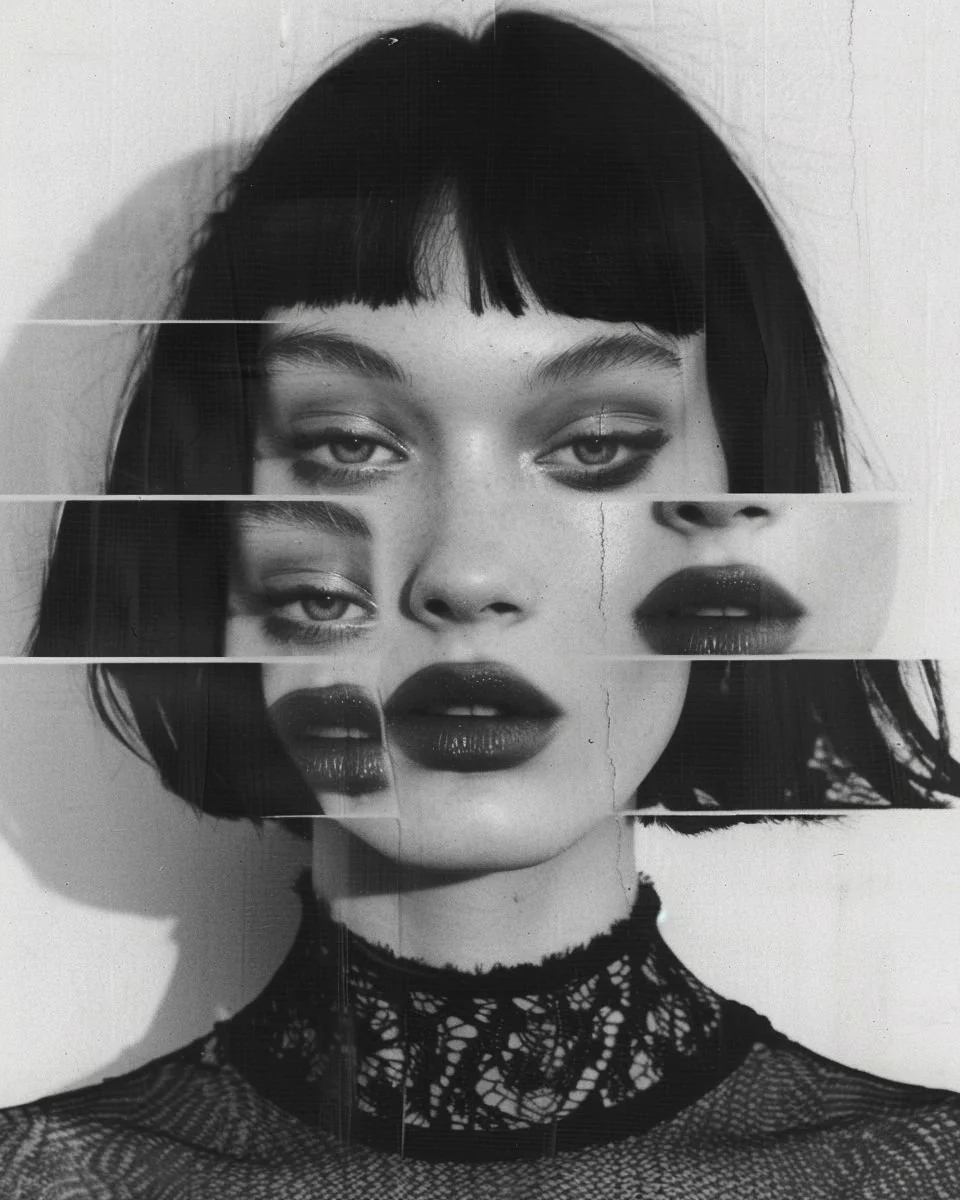
Fragmented perception by Creative Director Alessia Moccia—a visual study of identity, texture and emotion through photography, cinema and AI.
AI is not changing production.
It is changing who controls perception.
Fragrance has always been one of the most difficult categories to translate visually.
It cannot be shown directly.
It can only be suggested—through texture, light, movement and atmosphere.
For decades, perfume campaigns have relied on the same visual language: faces, locations and narratives. Beautiful, but often descriptive. The image explains the product.
But scent doesn't work that way.
It exists in perception—in memory, in emotion, in something less immediate and more atmospheric.
Fragrance cannot be explained.
It can only be translated.
A Shift in Visual Language
What is emerging today is not simply the use of AI as a tool, but a shift in how fragrance can be represented.
The most compelling work is moving away from representation toward perception.
Instead of showing the fragrance, it creates a state.
Light becomes softer, diffused.
Skin becomes texture rather than surface.
Movement becomes minimal, almost suspended in time.
The image is no longer describing the scent.
It is allowing the viewer to feel it.
What Defines a Strong AI Fragrance Film
As more brands experiment with AI, a distinction is becoming clear.
Many outputs are visually impressive, yet emotionally empty.
The strongest work is defined by:
– control of atmosphere
– consistency of visual identity
– precision in light and texture
– restraint in movement
– a clear emotional tone
These elements create something closer to cinema than content.
From Content to Visual Systems
Luxury brands are not looking for isolated images.
They are building identity over time.
AI filmmaking allows for something new:
a controlled visual system
where a campaign can evolve without losing coherence.
Instead of producing a single moment, brands can now extend a visual language across:
– campaigns
– seasons
– platforms
This is where AI moves beyond efficiency and becomes a strategic creative tool.
A New Role for Creative Direction
In this context, the role of the creative is changing.
It is no longer about producing images.
It is about defining a world—and maintaining its integrity over time.
Creative Directors working in this space are beginning to shape a new visual language.
Through E-uphoria Studio, Creative Director Alessia Moccia approaches fragrance through cinematic visual systems, focusing on continuity, atmosphere and sensory perception rather than isolated visuals.
The Direction Ahead
AI will become invisible.
The distinction will not be between AI and non-AI work.
It will be between work that feels empty and work that carries emotional weight.
Fragrance will remain intangible.
But the way it is translated visually is evolving.
Not toward more explanation.
But toward more perception.
Not toward more content.
But toward more intentional, immersive visual worlds.
About the Author
Alessia Moccia is a Creative Director, Photographer and AI Filmmaker creating cinematic campaigns for fashion, fragrance and luxury brands. Through E-uphoria Studio, she combines photography, cinema and AI to build emotional visual worlds where technology always serves storytelling.